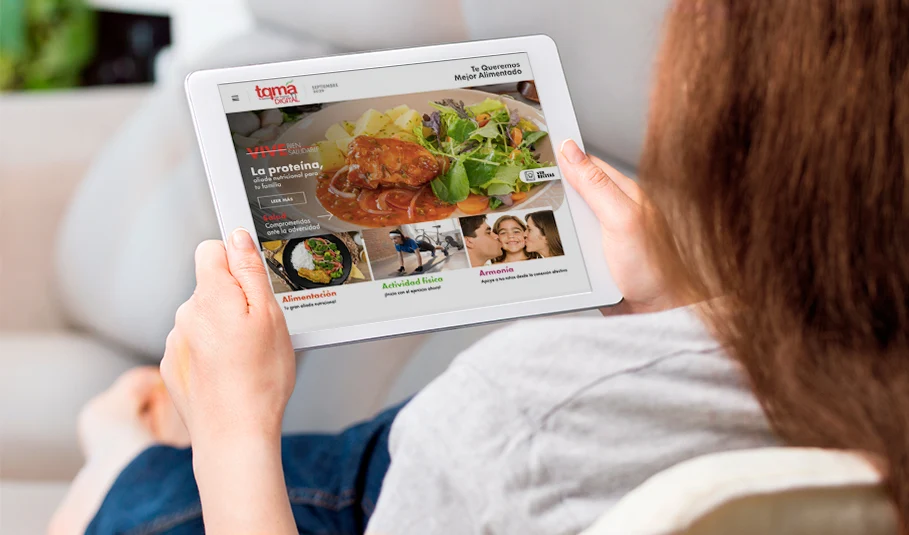
A household receives a cooking magazine, and a shopkeeper receives a trade magazine — eighteen issues a year, both from the food company they already buy from, on paper and pixels the company owns. I ran both titles at Pronaca, for two audiences with nothing in common.
Eighteen issues a year across two audiences with nothing in common: households who cook, and shopkeepers who stock. The unfashionable half is the interesting one — a print trade title reaching nine thousand shopkeepers, in a market where a large share of the volume moves through their shelves.
Media placement, priced per campaign, re-bought every quarter. Predictable and permanently rented.
An editorial operation with a fixed cost, a monthly obligation and an audience that does not disappear when the flight ends.
Su Tienda is the line most marketers cut first: print, unglamorous, B2B. In a market where protein moves through neighbourhood shops, reaching nine thousand shopkeepers is not nostalgia. It is distribution.
| Title | Audience | Issues a year | Reach |
|---|---|---|---|
| TQMA | Consumers — households who cook | 12 | 250,000 readers |
| Su Tienda | Trade — neighbourhood shopkeepers | 6 | 54,000 shopkeepers |
Combined investment in the two titles: $6X K a year — for eighteen issues and a reach the company never has to re-buy.

Su Tienda is the title most marketers would cut first — print, unglamorous, a B2B audience. In a market where a large share of protein moves through neighbourhood shops, it is not nostalgia. It is distribution.
The pillar structure gave the editorial team a brief every month instead of a blank page: nutrition, movement, family harmony.
Content aimed at the person deciding what to stock — the audience whose shelf decisions the brand depends on and almost nobody talks to.
Food photography supervised in-house, including the production of the printed cookbook Magia en tu Cocina. It is directed, not ordered.
The same recipe system fed magazine, site, app and social — which is why eighteen issues a year was possible at all.
Advertising asks for attention. A magazine somebody keeps in the kitchen is given attention, monthly, for years. The economics are not comparable: $6X K a year against what the equivalent reach would cost in bought media.
It also changed the internal conversation. Once the company was a publisher, the question in the room stopped being 'what should the campaign say' and became 'what is worth publishing' — which is a much harder and much better question.
Consumers and trade, each with content made for them.
Print and digital titles that carry every brand.
Your own titles, your own audience.